Open science at the frontier of robot manipulation
We build and publish manipulation benchmarks, datasets, and model architectures. Open science is core to what we do.
What we work on
Four interconnected research threads that together enable robust, generalizable manipulation in industrial environments.
Predicting stable grasp candidates for objects the model has never seen, using only their point cloud geometry at inference time. No CAD files. No part-specific retraining.
Transformer backbone design for multi-task manipulation: understanding how scale, pre-training data mix, and action head structure affect generalization across object categories.
Bridging the domain gap between simulated manipulation environments and real factory floors with metallic parts, variable lighting, and industrial noise profiles.
Closing the manipulation loop with real-time force and torque sensing. Detecting slip, recovering from failed picks, and adapting grip pressure without operator intervention.
Technical reports and peer-reviewed work
We document our methods and make them available for the research community. Attribution uses venue-style citations, not fabricated DOIs.
We introduce a point-cloud transformer architecture pre-trained on 3.2M manipulation demonstrations that achieves 94% zero-shot grasp success on never-seen industrial parts. Evaluated on the RLWRLD Manipulation Benchmark (RMB-2K) across 20 industrial part categories.
We show that closing the manipulation loop with force-torque feedback reduces mid-grasp slip by 61% compared to vision-only baselines on metallic parts under industrial lighting variation. Policy training procedure and force representation design described in detail.
Domain randomization strategies and sensor noise modeling for bridging simulation-to-real gap on metallic industrial parts. We document the domain adaptation pipeline used in our factory deployments and measure residual performance gap across five part families.
We study how object-centric scene representations affect zero-shot pick-and-place generalization. Our encoding separates object identity from pose and surface geometry, enabling manipulation of unseen objects without re-training the placement policy.
RLWRLD Manipulation Benchmark (RMB-2K)
A standardized evaluation suite for zero-shot manipulation generalization across industrial part categories. Dataset available on request for academic research.
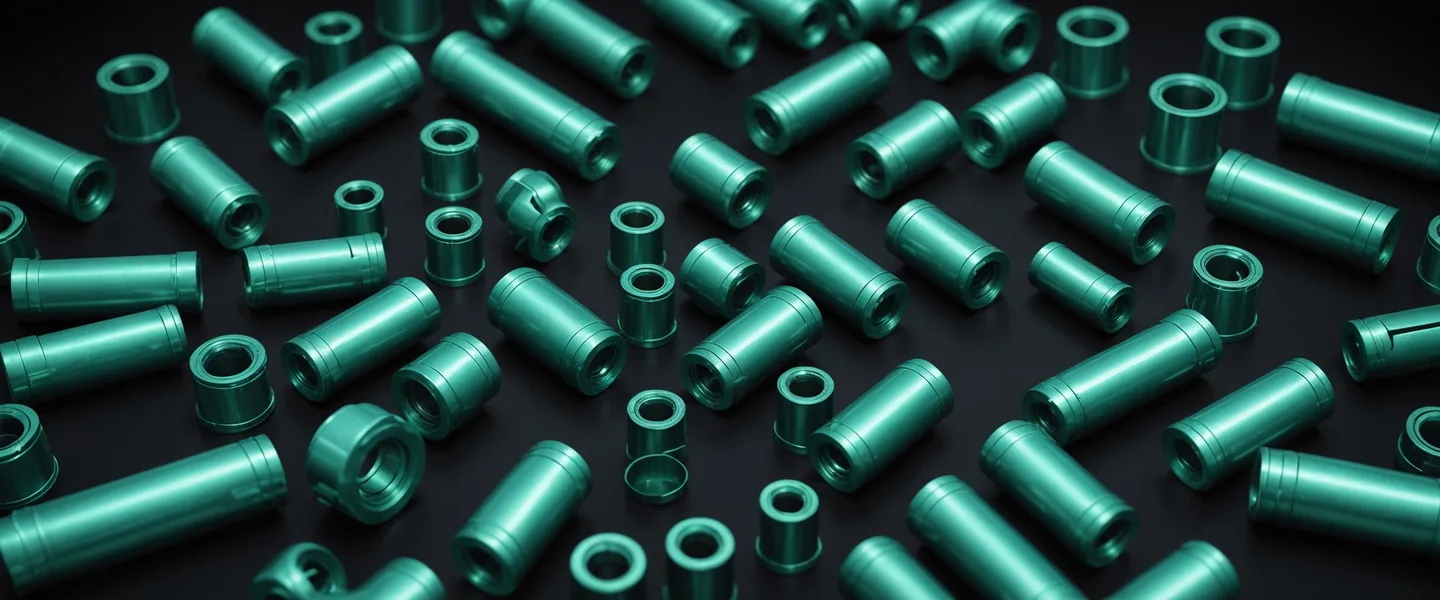
Novel 3D object meshes spanning 20 industrial part categories: bearings, brackets, connectors, fasteners, flanges, stamped metals, and more.
Zero-shot grasp success rate, pose estimation MAE (mm, deg), and placement accuracy under force-torque feedback. Reported separately for seen and unseen categories.
Automotive, electronics, precision machined, cast metal, and sheet metal categories. Size range from M3 fasteners to 200mm flanges.
Mesh dataset and evaluation scripts available to academic and industrial research groups. Contact us with your research context.
Work with us on the hard problems
If you are a university group or manufacturing partner interested in co-developing evaluation datasets or deploying the model in a research context, reach out.